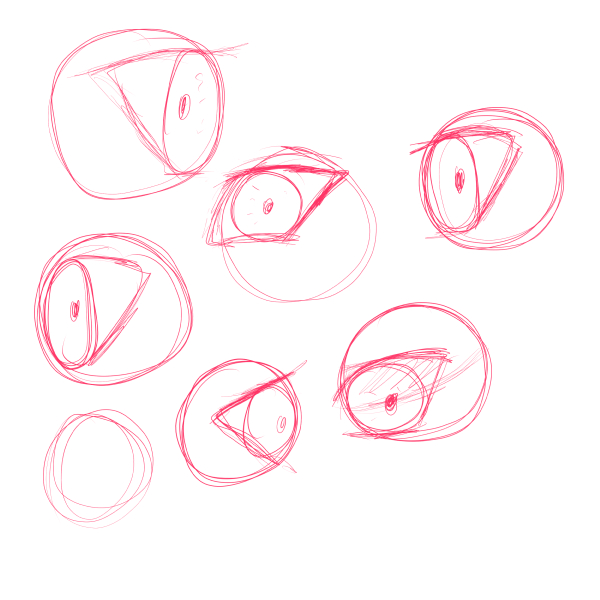
Hello, Sumine here.
Today, I will be practicing **drawing eyes**.
WARM-UP SESSION
Before starting, I practiced creating the eye framework first, refreshing my head structure to avoid forgetting it.
Here is an overview of my warm-up session.
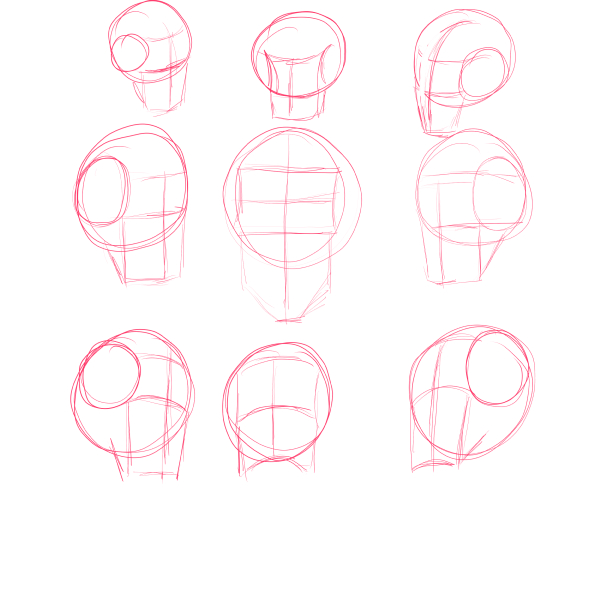
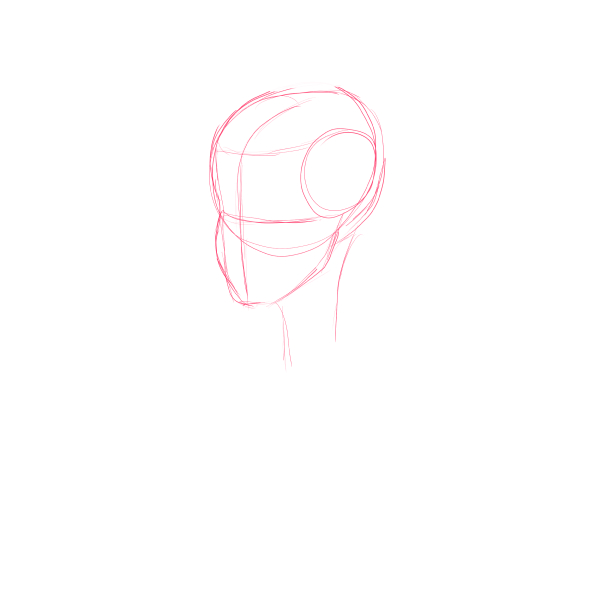
You can see from my warm-up session that I drew the head framework first.
I started with a circle > small circle as a marker > center line > chin line > eye and nose lines.
PRACTICE PROCESS
Next, I started the actual practice.
I began by drawing the eyeball first and then the eyelid on top of it.
In my opinion, eyelids have several shapes:
1. Parallelogram
The most basic and common shape is a parallelogram.
2. Capsule
The capsule shape is generally used for semi-realistic drawings.
3. Half-circle
Finally, the half-circle shape is commonly used for cartoon or anime styles.
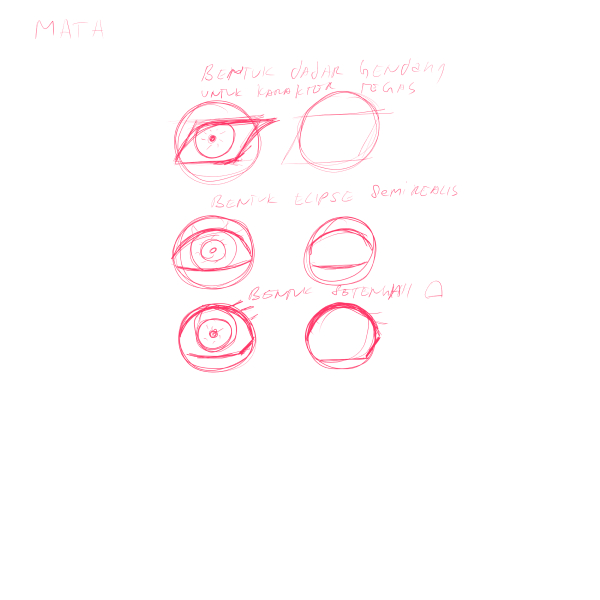
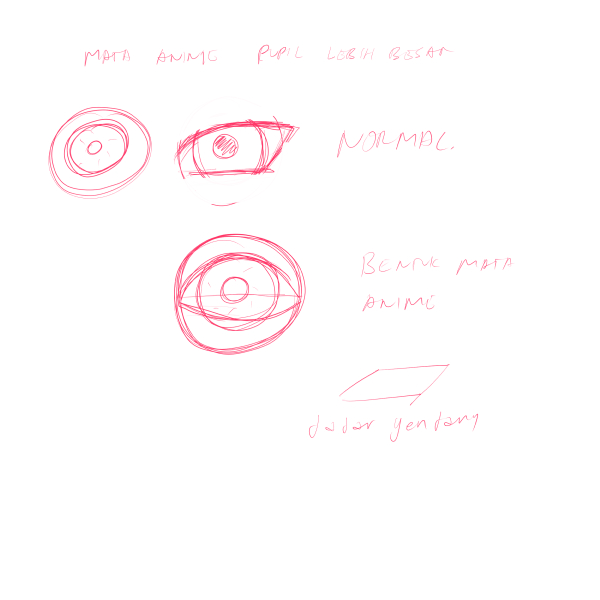
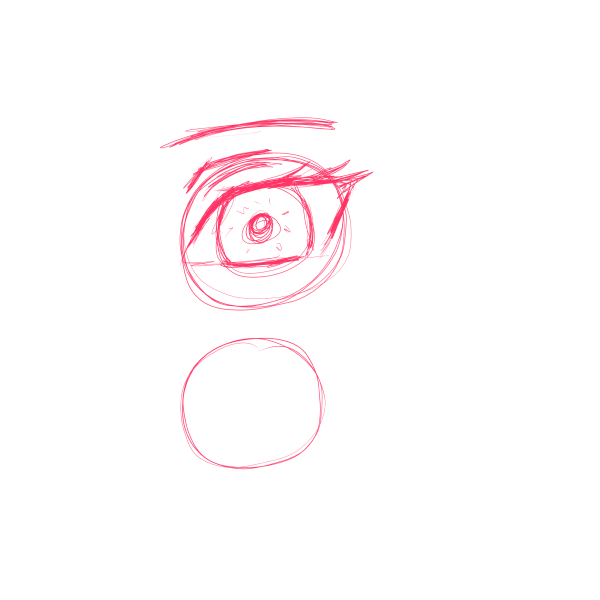
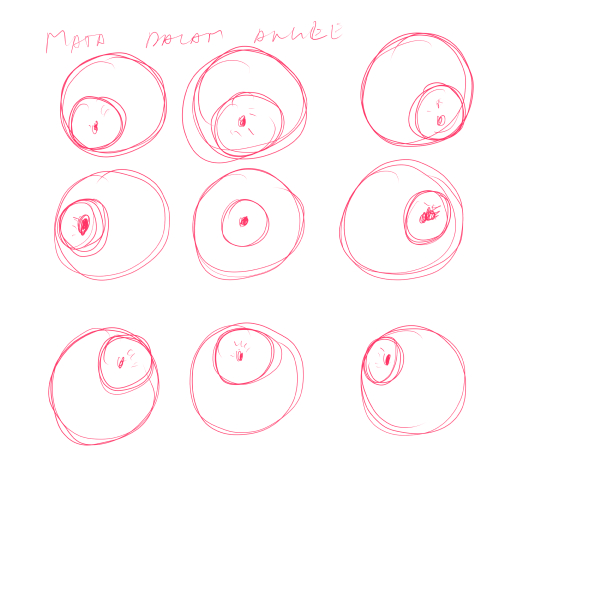

From today’s practice, I concluded that:
- The ratio between the pupil and the eyelid depends on the expression.
- If the distance between the pupil and the upper and lower eyelids is wide, the eye shows a surprised expression.
- If the eyelids are almost closed, the eye looks sleepy.
- If part of the upper or lower pupil is covered by the eyelid, the eye appears normal.

Tinggalkan komentar